China
China
 Malaysia
Selecting the right dunnage air bags comes down to matching the bag's material construction to your specific shipping environment. While both types serve the same primary function—filling voids to restrict cargo movement—Kraft paper and PP woven dunnage air bags utilize different outer shells that offer distinct performance characteristics.
Every dunnage air bag relies on a multi-layer design. The inner bladder, typically made of co-extruded polyethylene (PE), holds the compressed air. The difference lies primarily in the outer protective shell.
Kraft Paper Dunnage Air Bags: The outer shell is constructed from high-strength Kraft paper. This material provides excellent surface friction, allowing the dunnage air bag to grip tightly against corrugated cardboard boxes and wooden pallets.
PP Woven Dunnage Air Bags: The outer shell is made from woven polypropylene threads. This synthetic construction offers a different structural profile, featuring high tear resistance and inherent moisture deflection.
Working pressure should be evaluated based on the exact product specifications rather than assuming one material is universally stronger than the other.
Standard Kraft Paper Dunnage Air Bags operate at a specified working pressure of 3 psi. Level 1 PP Woven Dunnage Air Bags operate at a specified working pressure of 0.2 bar. Your selection must align with these specified working pressures and the crushing limits of your primary packaging.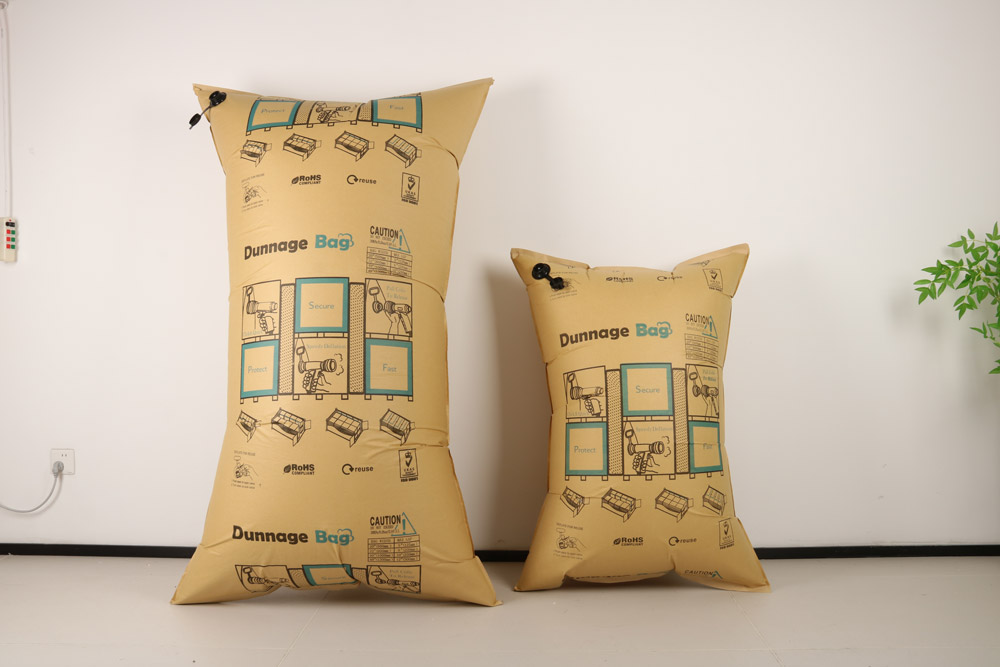
Your logistics environment plays a key role when evaluating paper versus woven dunnage air bag materials.
Because Kraft paper offers a high-friction surface, it is highly effective at gripping corrugated boxes during typical dry transport in trailers or standard shipping containers.
On the other hand, the woven polypropylene shell of a PP woven dunnage air bag naturally resists moisture and tearing. This makes PP woven dunnage air bags a strong candidate for shipments exposed to high humidity, or when the cargo packaging features rougher contact surfaces that require enhanced durability.
Standard sizes for both Kraft paper and PP woven dunnage air bags accommodate most common pallet voids. However, Ameson provides custom manufacturing for specific securement requirements.
Buyers can request custom dunnage air bag dimensions to fit non-standard cargo gaps and specific material configurations. We also offer custom logo printing on the outer shell, allowing you to maintain brand visibility when the container doors open at the destination.