China
China
 Malaysia
Shipping standard 750 ml wine bottles requires packaging that can absorb external shocks and reduce the risk of glass breakage. A practical method for single-bottle shipping involves using a Q-type air column bag, which creates a structured, air-filled cushion directly around the glass.
Here is a step-by-step guide to packing a wine bottle using this method.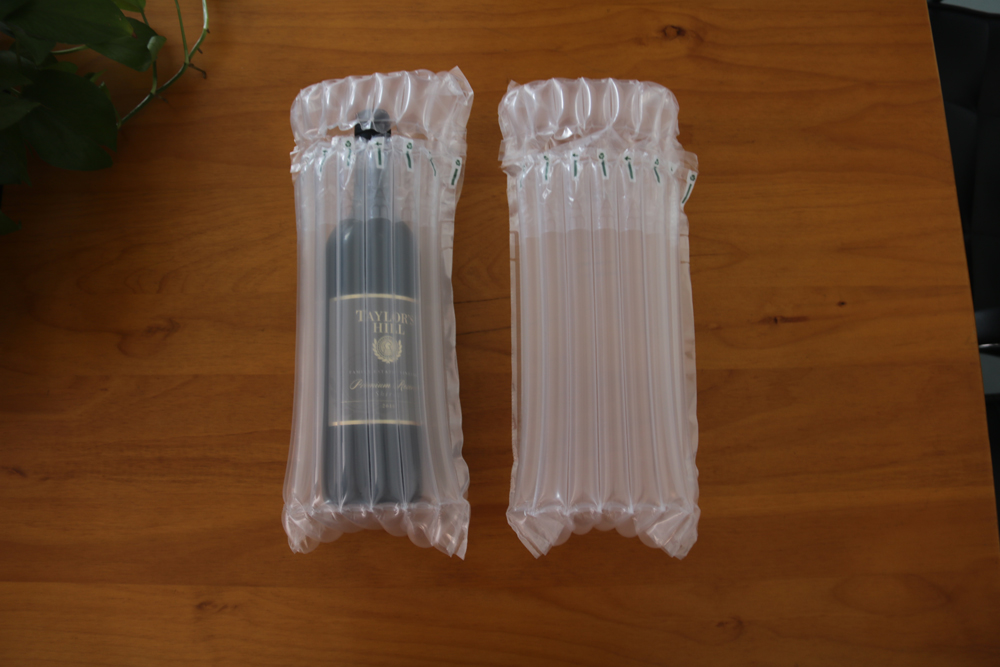
To set up your packing station, you will need the following materials:
Q-Type Air Column Bag (240 × 415 mm): This specification is designed for standard 750 ml wine bottles, though it is important to ensure it matches your specific bottle shape.
Manual Hand Pump: A basic hand pump to inflate the air columns without the need for automated machinery.
Shipping Carton: A corrugated cardboard box to hold the packed bottle.
Void Fill Materials (if needed): Crumpled kraft paper or air pillows to fill any remaining empty gaps inside the shipping carton.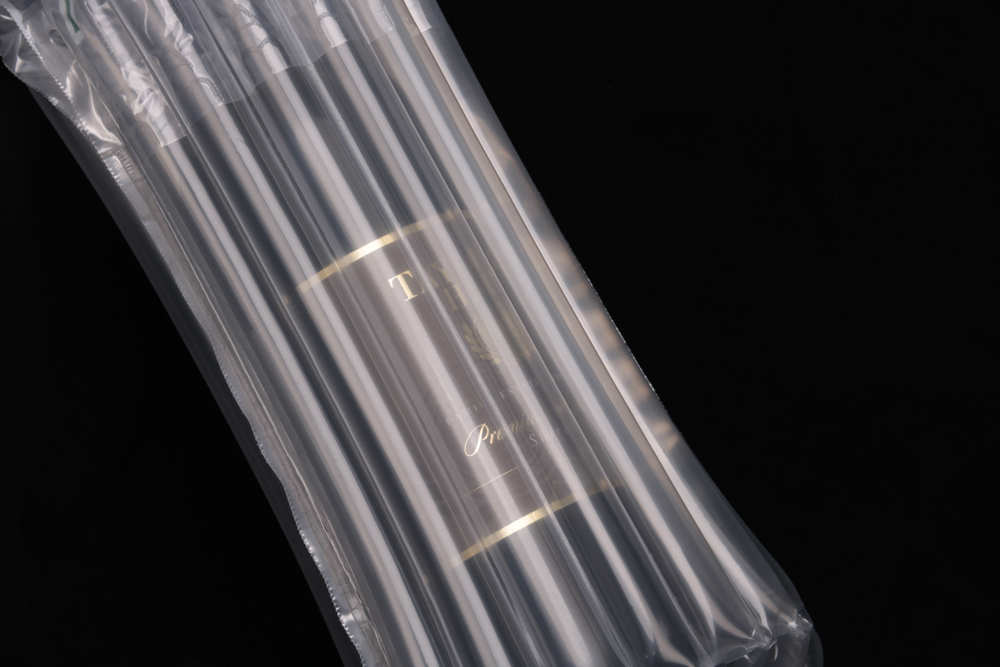
Before you begin packing, check the wine bottle and the uninflated air column bag. Confirm that the bag you are using is a suitable match for your 750 ml bottle's dimensions.
Always insert the bottle before adding air. Slide the wine bottle into the pre-cut Q-type bag while it is still flat. Position the bottle carefully inside so that the base, main body, and shoulder are all resting well within the effective protective area of the bag.
Locate the inflation valve on the bag and insert the nozzle of your manual hand pump. Begin pumping to fill the surrounding columns with air. Follow the manufacturer's specific inflation guidelines, stopping once the bag is properly inflated and wraps snugly around the glass to avoid over-inflating and stressing the material seams.
Verify that the columns are holding air properly and that the wine bottle is securely encapsulated. Q-type bags feature an independent column structure. This means that if one column suffers a puncture during transit, the remaining columns stay inflated, helping to maintain the overall cushioning protection.
Place the protected bottle inside a suitable shipping carton. If there is empty space between the inflated air bag and the cardboard walls, add your void fill materials. This prevents the wrapped bottle from sliding or shifting around when the box is handled.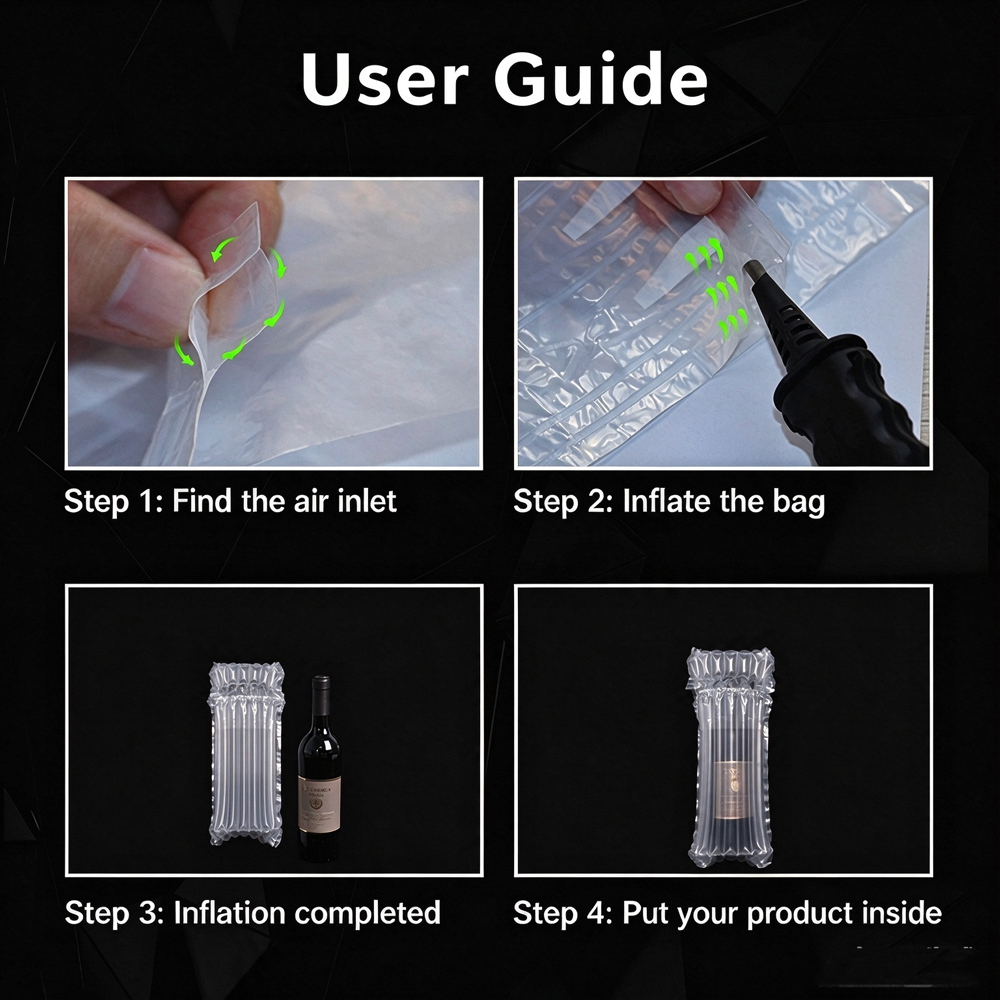
Choosing the wrong bag size: Using a bag that does not match the bottle’s dimensions reduces the wrapping effectiveness and can leave parts of the glass exposed.
Leaving the bottle shoulder or base exposed: Failing to position the bottle deep enough into the bag before inflation leaves critical impact points vulnerable.
Inflating the bag incorrectly: Under-inflating limits the shock absorption, while over-inflating can stretch and damage the bag.
Leaving empty spaces in the carton: Relying solely on the air column bag without adding necessary void fill leaves room for internal shifting.